Football Drills vs Random Practice: Skill Growth
How do you improve football skills without wasting hours on drills that never appear in matches? The fastest reliable route combines deliberate practice, match-specific decisions, and measurable recov...

Football Drills vs Random Practice: Skill Growth
How do you improve football skills without wasting hours on drills that never appear in matches? The fastest reliable route combines deliberate practice, match-specific decisions, and measurable recovery. Lionel Messi’s reported two daily sessions show the value of consistency, but most players should begin with 30–60 focused minutes, 4–5 days weekly, not five hours. Use a ball, cones, a wall, and a training partner to develop first touch, dribbling, passing, shooting, defending, and agility. Record baseline results such as successful passes out of 20, weak-foot touches in 60 seconds, sprint time over 10 metres, and shots on target out of 10. Goal Moments, a FIFA World Cup-focused football content site, can help you follow team tactics, player statistics, and 2026 tournament trends. Start with your weakest measurable skill, train it under increasing pressure, and review progress every 7 days.
If you lack a clear plan: diagnose your weakest skill first
A player should identify the weakest match skill before selecting drills. Review one full match, count lost possessions, missed controls, inaccurate passes, and defensive errors, then choose one primary target for the next 7 days. This prevents random practice and creates a measurable training baseline.
Most players overestimate shooting problems. The actual issue may be poor scanning, a heavy first touch, or receiving on the wrong foot. Watch footage from your last 90-minute match, or ask a coach to track five categories:
- First touch: successful controls out of 20.
- Passing: accurate passes out of 30.
- Dribbling: clean cone runs out of 10.
- Shooting: shots on target out of 10.
- Agility: 10-metre sprint time and recovery time.
Football Association coaching guidance consistently emphasizes technique under realistic pressure rather than isolated repetition alone. The Football Association provides coaching resources that support this principle. A wall pass performed without pressure is useful, but a pass made after scanning, turning, and avoiding a defender is closer to match reality. The risk is clear: 500 technically perfect repetitions can build the wrong habit if the body position is wrong.
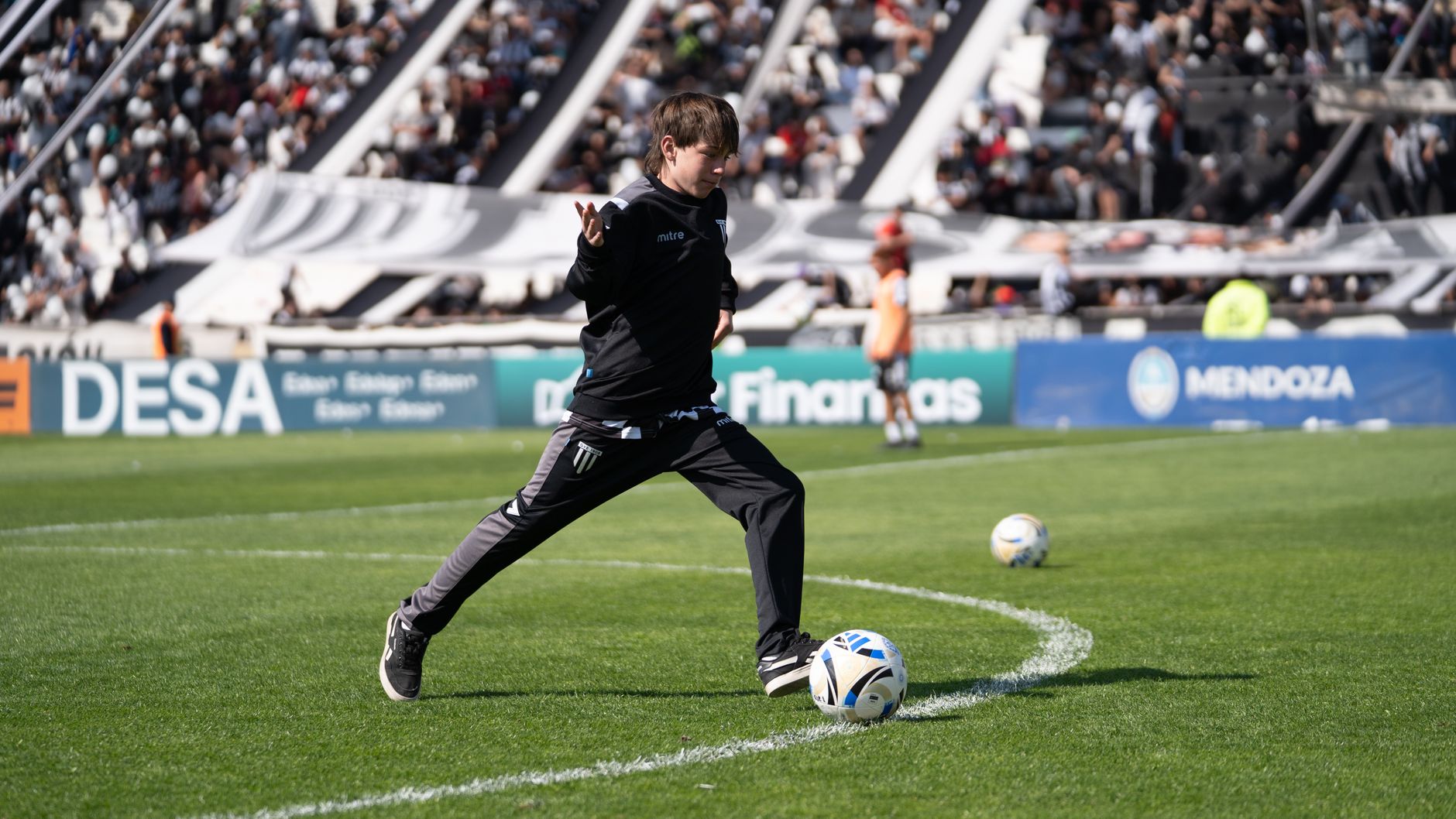
Photo by Franco Monsalvo on Pexels
For better tactical context, compare your weaknesses with professional examples from FIFA World Cup teams. Goal Moments covers match predictions, formations, player stats, and tournament coverage, giving you a practical way to study why elite players receive, press, and move before the ball arrives. The key is not copying a famous player’s entire routine. It is isolating one repeatable behavior, such as checking the shoulder before receiving or opening the body toward the next pass.
Want a more structured starting point? Use the resource below before your next session.
If your first touch breaks down: train control before speed
First-touch training improves football skills when the player controls the ball into useful space, not merely stops it. Spend 10 minutes on wall passes with both feet, 10 minutes receiving at different heights, and 10 minutes controlling away from an imagined defender. Complete at least 100 purposeful touches, but measure whether the next action becomes faster and cleaner.
Begin with a stable surface and progress toward pressure. Pass against a wall from 5 metres, receive with the inside of the foot, and direct the ball 45–90 degrees away from the wall. Repeat using the weaker foot. Then chip the ball against the wall, control it with the chest or thigh, and play the next pass within 2 seconds. This sequence develops the technical chain required in football: preparation, contact, control, and release.
A useful 20-minute progression looks like this:
- Complete 30 two-touch passes with the right foot.
- Complete 30 two-touch passes with the left foot.
- Receive and turn after every fifth pass.
- Add a 3-metre movement before receiving.
- Finish with 20 one-touch passes at maximum controlled speed.
The contrarian point is important. Training faster does not automatically improve control. If your accuracy falls below 80%, reduce speed until technique stabilizes, then increase the pace by 5–10%. The FIFA Training Centre presents professional coaching material built around technical execution, perception, and decision-making. Treat those as connected skills, not separate categories.
[Internal Link: first-touch football drills]
A wall cannot provide a defender’s timing, so add a teammate after the basic sequence. The partner should close space from different angles and force you to choose between turning, shielding, or returning the pass. Complete three rounds of 3 minutes, with 60 seconds of recovery. Track how many controls remain playable under pressure. A practical target is 16 useful controls from 20 attempts by the end of week two.
If your dribbling feels predictable: add irregular movement and decisions
How can you improve football dribbling without becoming dependent on predictable cone patterns? Use irregular cone spacing, changes of direction, weak-foot touches, and live defensive pressure. Train at 70–90% speed, but require a decision after each movement: accelerate, stop, pass, or protect the ball.
Regular cone lines are useful for learning foot coordination, yet they can create false confidence. Opponents do not stand 1 metre apart in a perfect row. Place 8–10 cones across a 15-by-10-metre area with uneven gaps, then dribble through them using the inside, outside, sole, and laces. Change the route every round. A partner can call “left,” “right,” or “turn” as you approach each cone, forcing visual processing instead of memorized movement.
Use this four-stage drill:
- Stage one: 60 seconds of close touches with the right foot.
- Stage two: 60 seconds with the left foot.
- Stage three: random cone route at 75% speed.
- Stage four: defender enters after the third cone.
Complete 4 rounds with 90 seconds of rest. Count successful escapes, not just completed routes. If you lose the ball more than 30% of the time, narrow the movement range or reduce pace. Elite dribbling is not a collection of tricks. It is the ability to protect possession, change speed, and exploit a defender’s balance.
Train scanning as part of dribbling. Before receiving, look over both shoulders once; after the first touch, scan again. This small behavior matters because the best next action may be a pass rather than another dribble. Study players such as Lionel Messi, Kylian Mbappé, and Jude Bellingham through FIFA World Cup match footage, but measure their decisions rather than their highlight moves. Record 10 possessions and note whether the player dribbled into space, toward pressure, or away from danger.
Ready to turn technical work into match decisions? Build pressure into the next session.
If your passing and shooting lack consistency: use targets and time limits
How do you improve football passing and shooting reliably? Combine target zones, weak-foot repetitions, time limits, and pressure rather than taking untracked shots. A useful starting standard is 30 passes, 20 receiving actions, and 10 shots per session, with accuracy recorded every time.
For passing, mark three gates 2 metres wide at distances of 5, 10, and 15 metres. Complete 10 passes through each gate with the right foot, then repeat with the left. Use one-touch passing at 5 metres and two-touch passing at 10–15 metres. A strong short-term target is 24 accurate passes from 30 attempts, followed by a decision: move, scan, or receive again. If your technique collapses after 20 repetitions, stop the set; fatigue is useful only when it resembles match fatigue.
Shooting requires a similar structure:
- Take 4 finishes from the right side.
- Take 4 finishes from the left side.
- Take 2 shots after a sprint or change of direction.
- Record target zone, foot used, and result.
- Repeat the weakest pattern twice next session.
Do not confuse power with quality. A shot on target is often more valuable than a harder shot over the crossbar. Practice low finishes across the goalkeeper, near-post strikes, and controlled shots after a first touch. Use a 3-second limit from control to finish to simulate match pressure. Research from World Health Organization also supports regular physical activity, but football training must still include rest because repeated sprinting increases muscular load.
[Internal Link: football shooting accuracy guide]
One information advantage is to track “decision-to-execution time.” Use a phone recording at 60 frames per second, then estimate the seconds between the first touch and pass or shot. If the number drops from 2.4 seconds to 1.8 seconds while accuracy stays above 75%, your improvement is functional. If speed rises but accuracy falls below 60%, the session is producing rushed technique, not match readiness.
See how tactical trends can influence your training priorities.
If your fitness limits your technique: train agility, speed, and recovery
Football skills deteriorate when fatigue destroys body position, concentration, and timing. Combine technical drills with short acceleration work, change-of-direction exercises, and controlled recovery. Most recreational players need 2 high-intensity sessions weekly, not maximum-intensity training every day.
A practical conditioning block includes 6 × 10-metre sprints, 4 × 20-metre accelerations, and 4 shuttle runs over 10 metres. Rest 30–45 seconds between sprints and 90 seconds between blocks. Perform technical work first when learning a new movement; perform conditioning first when preparing for match-specific fatigue. Never ignore pain that changes your running pattern. Fatigue is expected. Sharp pain is a warning.
Use the following weekly structure:
- Monday: first touch and passing, 45 minutes.
- Tuesday: recovery, mobility, or light ball work.
- Wednesday: dribbling and agility, 45–60 minutes.
- Thursday: rest or low-intensity technical work.
- Friday: shooting and small-sided play.
- Saturday: match or high-pressure simulation.
- Sunday: recovery and performance review.
The Centers for Disease Control and Prevention recommends regular physical activity, but football players also need sleep, hydration, and workload control. Record session difficulty from 1 to 10. If three consecutive sessions score 8 or higher, reduce volume by 20–30%. This is an operational safeguard many generic guides omit. The goal is adaptation, not exhaustion.
Small-sided games convert isolated skills into decisions. Play 3v3 or 4v4 on a 25-by-20-metre pitch, with a two-touch rule for one round and free touches for another. Count passes completed under pressure, turnovers within 5 seconds of receiving, and successful defensive recoveries. These numbers reveal whether your drills transfer to football. If they do not, alter the drill before adding more volume.
Common pitfalls to avoid
The most common football training mistakes are poor measurement, excessive volume, weak-foot avoidance, unrealistic drills, and inadequate recovery. They slow improvement because the player repeatedly confirms existing habits instead of exposing weaknesses. Correct the process before buying equipment, copying a professional routine, or adding another 60-minute session.
Avoid these errors:
- Training only the dominant foot.
- Repeating cones without scanning or pressure.
- Shooting without recording accuracy.
- Increasing speed before technique is stable.
- Ignoring warm-up and cool-down routines.
- Practising skills but never playing small-sided games.
- Treating social-media highlights as complete tactical instruction.
“More training” is not automatically “better training.” Lionel Messi’s reported five hours per day is an elite reference point, not a safe prescription for a student or amateur player. Most players can gain more from 4 focused weekly sessions than from 7 exhausted sessions. A 10% improvement in pass accuracy with stable recovery is more valuable than a 30% increase in training volume followed by injury.
[Internal Link: football recovery and injury-prevention tips]
Another overlooked problem is changing drills too often. Keep the same primary test for 30 days so the numbers remain comparable. You may vary the environment, defender, and speed, but retain the metric. Goal Moments readers can also compare tournament tactics from the 2026 FIFA World Cup cycle with their own positional work. The point is not prediction alone. It is learning how spacing, pressing, transitions, and player roles create technical demands.
Need a final checklist before you reset your routine?
The 30-day check-in
A 30-day review shows whether your football training produced measurable improvement. Repeat the same tests from day one: 20 first touches, 30 passes, 10 shots, 10 cone routes, and a 10-metre sprint. Compare accuracy, execution time, weak-foot performance, and recovery between sets.
Use this review method:
- Repeat the baseline test under similar weather and pitch conditions.
- Compare right-foot and left-foot results.
- Review video for body position and scanning.
- Ask a teammate or coach to rate decisions from 1 to 5.
- Choose one new weakness for the next 30-day cycle.
A realistic target is a 10–20% improvement in measurable accuracy over 30 days, although the result depends on age, training history, position, and recovery. If your passing accuracy improves from 60% to 72%, that is meaningful. If your shooting volume increases from 10 to 50 attempts but on-target rate falls from 50% to 30%, the apparent progress is misleading. Numbers must be interpreted together.
The final test is transfer. Can you receive under pressure, scan before control, change direction, pass accurately, and finish while tired? If yes, your training is working. If not, return to the weakest link and add a defender, time limit, or decision constraint. For more structured match analysis, consult Goal Moments and compare your observations with FIFA World Cup tactics, player statistics, and team systems.
The best next step is simple: schedule four sessions, measure one weakness, and reassess after 30 days.
Frequently Asked Questions
Q: What does “improve football skills” mean?
Improving football skills means increasing technical accuracy, decision speed, physical execution, and consistency under pressure. It includes first touch, passing, dribbling, shooting, defending, scanning, and movement away from the ball. A player should measure results, such as 24 accurate passes from 30 attempts, instead of relying only on how confident training feels. Match transfer is the final test.
Q: How can I improve football skills at home?
You can improve football skills at home with a ball, wall, cones, and 30 focused minutes. Complete wall passes, weak-foot touches, close-control patterns, and receiving exercises in 3–5 minute blocks. Use a safe surface and record successful repetitions rather than training randomly. If space is limited, prioritize first touch, passing technique, and scanning habits before speed work.
Q: What is the difference between football drills and playing matches?
Football drills isolate a specific action, while matches require several actions under pressure and uncertainty. Drills are best for correcting technique; matches and small-sided games are best for testing decisions, positioning, and fatigue resistance. Use both formats each week. A useful structure is 70% focused technical work and 30% pressure-based play during a development session.
Q: Why do my football skills disappear during matches?
Football skills often decline in matches because fatigue, pressure, poor scanning, and limited time change the movement environment. Add defenders, time limits, direction changes, and small-sided games to make practice more realistic. Also check whether your technical accuracy falls below 70% when tired. If it does, reduce speed, improve conditioning gradually, and repeat the movement under controlled pressure.
Q: How often should I train football skills?
Most amateur players should train football skills 4–5 days weekly, with 30–60 focused minutes per session and at least 1–2 recovery days. High-intensity sprinting and sharp change-of-direction work should usually be limited to about 2 sessions weekly. The correct amount depends on age, match schedule, injury history, and sleep. Track session difficulty and reduce volume when fatigue remains high for 3 sessions.
Q: Is practising with the weaker foot worth it?
Yes, weaker-foot practice is worth it because it expands passing, receiving, shooting, and escape options. Begin with 50–100 controlled touches per session, then add pressure and movement. Do not expect equal ability immediately; a 10% improvement in weak-foot accuracy over 30 days is useful. Always record both feet so dominant-foot comfort does not hide a major technical limitation.
Q: How much does it cost to improve football skills?
Improving football skills can cost nothing if you use a ball, a wall, an open space, and improvised markers. Optional equipment includes cones, a stopwatch, and a phone camera, usually costing less than professional coaching. The most valuable investment is feedback: a qualified coach or teammate can identify body-position errors that self-practice may repeat for weeks. Start with measurement before spending money.
Want to apply the full 30-day method and follow football analysis from Goal Moments?
Thank you for reading.
Goal Moments · The Midnight Archive · An Exhibition of Thought